Coatings for Large Industrial Components | AFUSA
Greg Yahn is an owner of Advanced Finishing USA and leads a diversified, third-generation metal finishing operation in Erie, PA. A Penn State-trained industrial engineer with an MBA, Greg has scaled the 80,000-square-foot facility into one of the leading powder coating companies in the Northeastern United States. Greg remains invested in the day-to-day operations at Advanced Finishing while also contributing his expertise to renowned publications and industry presentations.
Coatings for Large Industrial Components
An early coat of rust on a massive steel frame quickly halts field work and ruins your machinery. Shipping those multi-ton parts back to a shop for touch-ups is too expensive, but leaving them to rot in the rain is not an option. This leaves engineers stuck searching for a heavy-duty finish to withstand physical wear without peeling.
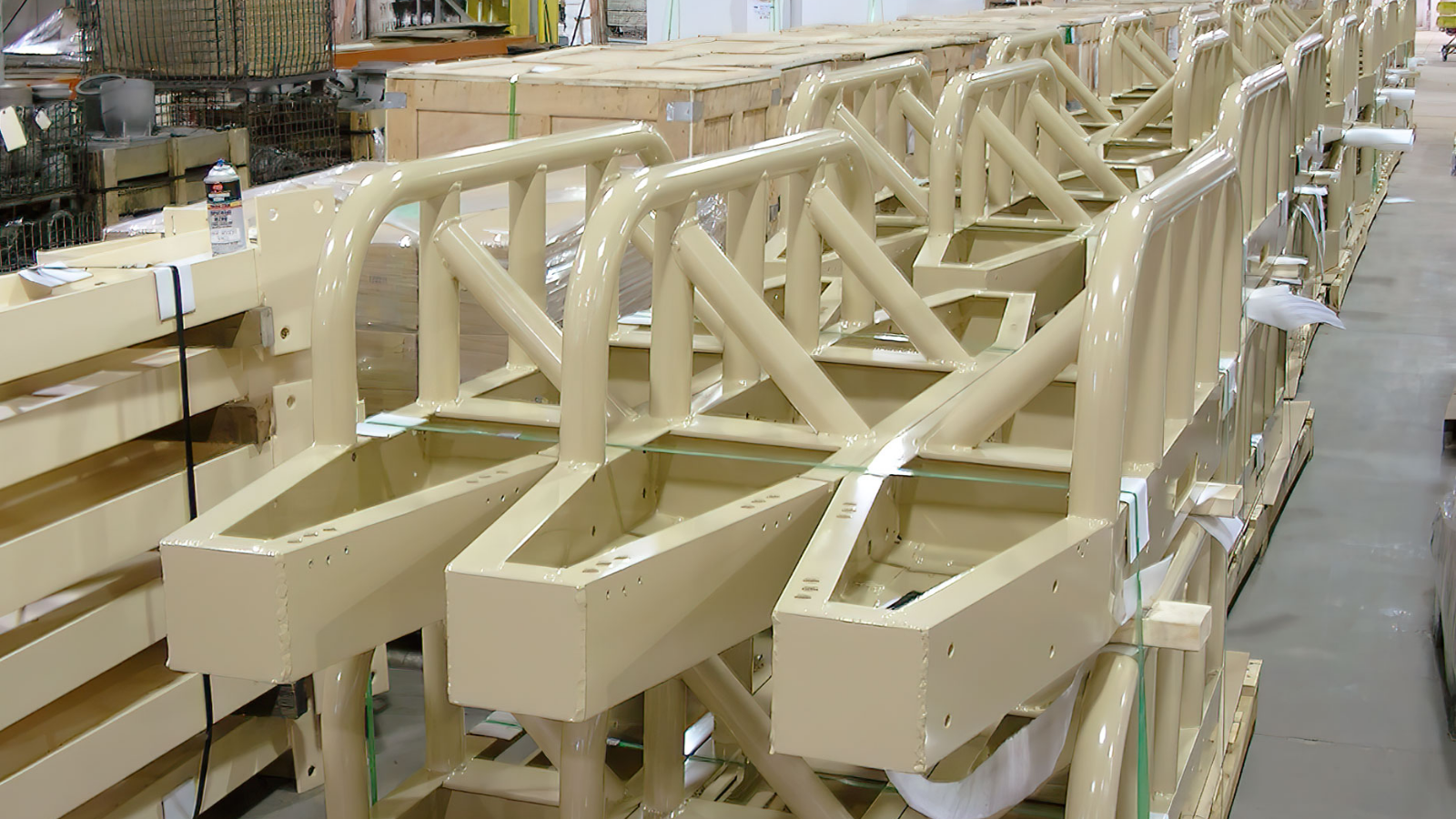
At AFUSA, we provide coatings for large industrial components to defend your heavy steel assemblies against corrosion, chemical attack, and physical wear. Industrial polymer coatings extend the operational life of your capital equipment in severe climates. Read on to learn more about choosing the right coatings to secure your heavy-duty assets.
Get a Quote for Coatings for Large Industrial Components »
How Environmental Stress Dictates Coating Selection
Selecting the correct finish for oversized components requires matching the operating environment to the appropriate chemical formulation. Analyzing these chemical needs during the initial design phase prevents early structural failure and keeps equipment safe.
Matching Surface Chemistry to Operating Environments
Each polymer formulation behaves differently when subjected to physical impacts and weather exposure:
Corrosion: Oversized parts in marine environments require epoxy powder coatings to block moisture. This highly cross-linked barrier stops electrochemical oxidation before rust can compromise the steel substrate.
UV Damage: Structural steel exposed to continuous outdoor sunlight relies on polyester powder coatings to resist ultraviolet degradation. The chemical bonds in polyester resist UV breakdown, preventing chalking and loss of film thickness.
Chemical: Components in chemical processing or wastewater facilities require finishes that remain inert when exposed to acids or alkalis. Specialized epoxy formulations block chemical absorption, eliminating the risk of coating swelling and subsequent delamination.
Abrasion: Heavy industrial equipment and mining machinery require high-impact coatings, such as nylon, to withstand abrasive environments. Nylon absorbs the kinetic energy of flying debris and prevents surface chipping.
Thermal: Exhaust systems and industrial piping operating at high temperatures utilize silicone-based liquid coatings to prevent thermal oxidation. Silicone polymers retain their adhesion and molecular structure at temperatures exceeding 500°F.
Securing Operational Longevity and Reliability
Specifying the right coating chemistry based on environmental threats eliminates premature failures and reduces field maintenance costs. Engineers can protect large capital assets and maintain predictable operational schedules by matching the finish to the anticipated exposure.
Why Leading OEMs Partner with AFUSA
At AFUSA, we have provided industrial coating services for over fifty years, specializing in high-volume runs and oversized components. Our Pennsylvania facility houses the equipment and quality-control testing necessary to deliver consistent, production-ready finishes.
Our Technical Capabilities and Infrastructure
We maintain the specialized equipment and professional certifications required to process oversized industrial components to exact specifications:
- Facility Scale and Capacity: Our 80,000-square-foot Fairview, PA. facility is equipped with heavy material-handling systems and oversized curing ovens to process large industrial components in a climate-controlled environment.
- Specialized Coating Certifications: As a certified 3M applicator of epoxy powder coatings, we apply functional polymer barriers via electrostatic spray and fluid-bed dip processes to prevent mechanical and chemical degradation.
- Automated Spindle Systems: Automated conveyor lines apply uniform, ultra-low-gloss wet paints for defense and industrial clients requiring highly consistent film thickness on high-volume production runs.
- Standardized Quality Verification: In-house ASTM testing protocols, including salt-spray exposure and cross-hatch adhesion verification, ensure that all finished parts meet strict performance requirements before shipment.
- Integrated Logistics Support: Secondary services, including surface blasting, zinc phosphating, drop shipping, and assembly and storage, eliminate multiple intermediate transport steps and help lower overall supply chain costs.
Our Coating Performance and Testing Standards
AFUSA verifies coating integrity by processing representative test panels alongside each production run to simulate extreme environmental exposure. Testing these coated coupons under standardized ASTM and military specifications confirms that the chemical and mechanical bond of the finish meets exact performance criteria before the completed parts ship.
When To Specify Powder Coating vs. Liquid Coating
Powder coating provides a robust physical barrier on large industrial components by melting and chemically crosslinking dry polymer resins in specialized curing ovens. Liquid-wet painting remains a viable alternative for oversized parts, where the thermal mass of heavy structural steel prevents efficient heat curing. Volatile organic compounds are released during solvent evaporation from large painted surfaces, making solvent-free powder finishing a preferred choice for environmental compliance.
Custom-fabricated components with massive physical dimensions and complex geometries must be processed manually inside specialized industrial batch booths. Conveyorized spindle equipment continuously runs smaller, high-volume sub-assemblies to complement the slower batch processing of oversized mainframes. Determining the proper processing path depends entirely on the weight of the large industrial components and the configuration of the curing equipment.
Thermoset finishes are ideal for heavy machinery components facing extreme mechanical wear or abrasive impacts in outdoor environments. Wet paint remains the necessary choice for large industrial components that require exact military-spec color matching or low-reflectance chemical barriers. Both application systems offer distinct physical advantages depending on the specific environmental stresses the large finished component must survive.
Large Industrial Component Coating FAQs
Q: What metals can AFUSA finish, and do you perform on-site structural painting?
A: Fabricated metal substrates, including steel, aluminum, and cast iron, are coated exclusively inside our controlled facility, as we do not perform on-site structural painting.
Q: Why would an architect specify wood grain powder coating instead of real timber?
A: Wood grain powder coating combines vacuum pressure and sublimation heat to fuse realistic timber patterns directly into durable, weather-resistant metal surfaces.
Q: How are high-performance epoxy powder coatings applied to industrial components?
A: Electrostatic spraying and fluid bed dipping are utilized to apply protective epoxy coatings, depending on the specific dimensions of your component.
Q: Are AFUSA’s industrial epoxy coatings certified for municipal water infrastructure?
A: NSF-approved epoxy powder coating services are provided in our shop to meet the rigorous safety demands of municipal water treatment and electrical infrastructure.
Partner With Afusa for Large Industrial Component Powder Coating
Protecting heavy steel parts from severe field wear demands matching the chemical formulation to the anticipated environmental exposure. High-quality coatings for large industrial components protect physical surfaces to extend the life of your metal assets.
AFUSA houses the high-capacity ovens and certified processes required to coat your heaviest parts. Handling the entire finishing cycle under our roof ensures your assemblies arrive ready for immediate use.
Click below for a quote and to learn more about our industrial coating capabilities.